For many years, the appeal of offshore electronics manufacturing was straightforward: lower production costs, established supply chains and access to large-scale manufacturing facilities.
But is the cheapest manufacturing quote always the most cost-effective option?
Recent years have given UK businesses plenty of reasons to reconsider. From supply chain disruption and geopolitical uncertainty to rising transportation costs and concerns over intellectual property, the challenges of managing overseas production have become increasingly difficult to ignore.
As a result, reshoring electronics manufacturing is attracting renewed interest.
For Original Equipment Manufacturers (OEMs), bringing production closer to home isn’t simply about supporting British industry. It can offer practical advantages in quality, communication, flexibility and supply chain resilience.
So, what does reshoring actually involve, and when does it make commercial sense?
What Is Reshoring in Electronics Manufacturing?
Reshoring means bringing manufacturing activities back to a company’s home country after previously outsourcing them overseas.
In electronics manufacturing, this could involve transferring PCB assembly, product integration, testing or complete box build production to a UK-based contract electronics manufacturer (CEM) like Active-PCB.
Importantly, reshoring doesn’t have to be an all-or-nothing decision. Some businesses choose to manufacture complex or lower-volume products domestically while retaining offshore production for established, higher-volume requirements.
It’s about finding the right manufacturing location for the product, rather than assuming one approach suits everything.
Here are some of the benefits of reshoring electronics manufacturing to the UK.
1. Keeping Intellectual Property Closer to Home
A PCB design can represent years of development, considerable financial investment and valuable proprietary technology. Protecting your intellectual property (IP) is understandably a priority.
Offshore manufacturing can introduce additional complexities when sharing sensitive design files, firmware and technical documentation across different legal jurisdictions.
Working with a UK electronics manufacturing partner can make it easier to establish clear confidentiality agreements, maintain oversight of technical information and collaborate directly with the people handling your product.
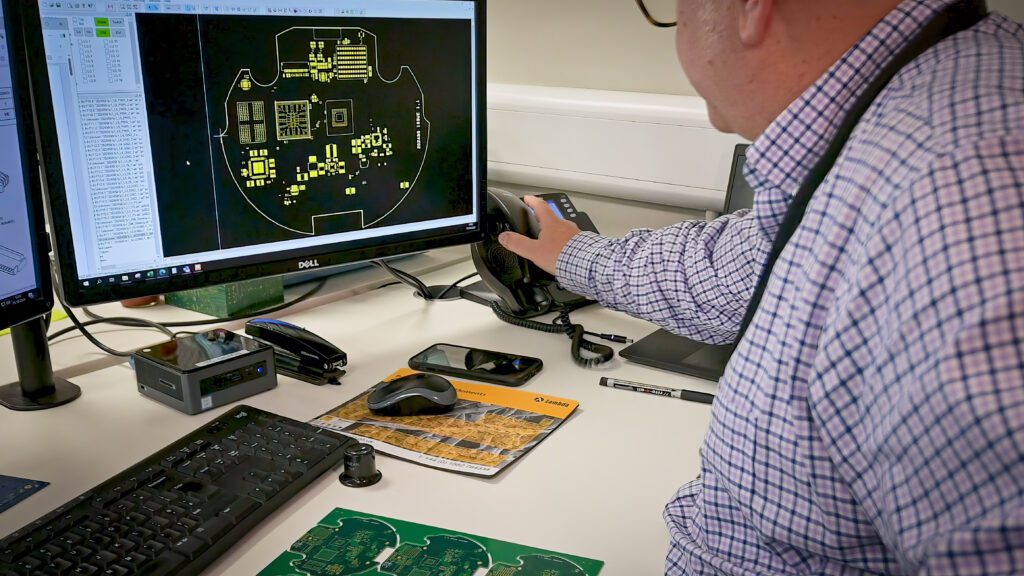
This becomes especially important during PCB prototyping and New Product Introduction (NPI), when designs are evolving and frequent communication between engineering and manufacturing teams is essential.
While geographical location alone doesn’t guarantee IP security, having a trusted manufacturing partner closer to home can provide greater visibility and control.
2. Shorter Supply Chains, Smaller Environmental Impact?
A PCB assembly manufactured thousands of miles away doesn’t simply appear at your facility. It needs to be packaged, transported, cleared through customs and delivered, sometimes travelling between multiple locations before reaching its final destination.
And what happens if that assembly needs modifying or reworking?
Further international shipments can add time, cost and additional transportation emissions.
Bringing electronics manufacturing closer to where products are developed or used can help reduce these journeys and increase the sustainability of your electronics, particularly for prototypes and products requiring frequent engineering changes.
Of course, sustainability isn’t quite as simple as comparing distances on a map. Energy consumption, component sourcing, manufacturing efficiency and waste management all contribute to a product’s environmental footprint.
Nevertheless, reshoring gives businesses an opportunity to examine their supply chains more closely and consider where genuine environmental improvements can be made.

3. More Control, Fewer Communication Barriers
Anyone involved in electronics manufacturing knows that things don’t always go exactly to plan. A component becomes unavailable, a design needs modifying, an engineering query requires clarification, or a customer suddenly needs to bring a delivery date forward.
When your manufacturing partner is on the other side of the world, resolving these situations can be more complicated. Time zone differences, shipping distances and communication delays can all affect how quickly a problem is addressed.
Working with a UK-based manufacturer can make day-to-day collaboration considerably easier.
Factory visits become more practical, engineering discussions can happen directly, and decisions can often be made without lengthy communication chains.
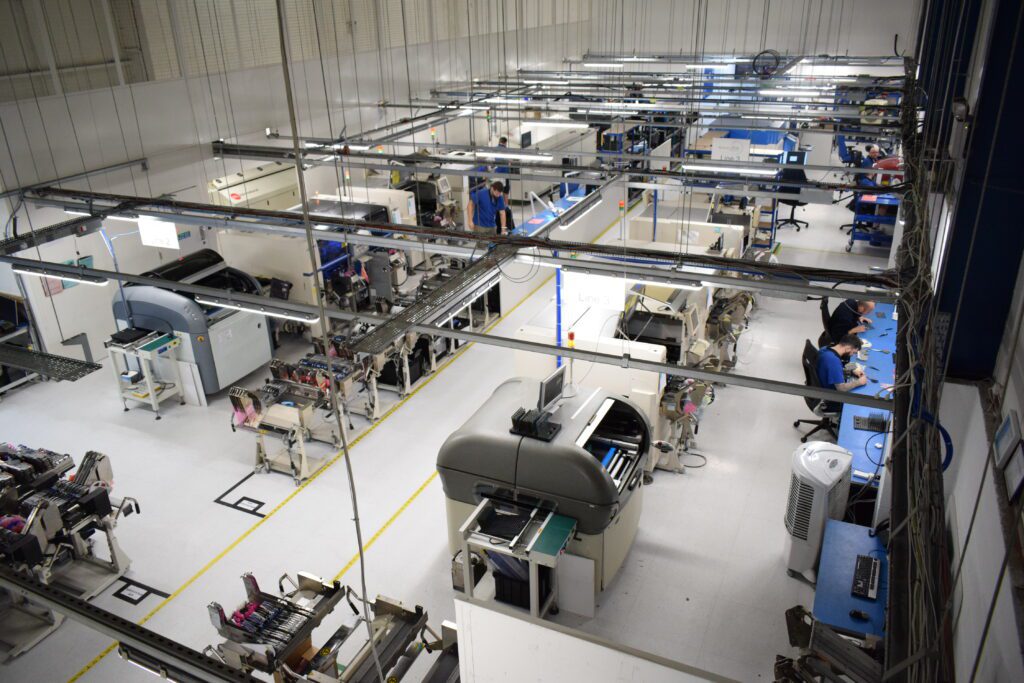
At Active-PCB Solutions, our Reading manufacturing facility brings together PCB assembly, testing and inspection, conformal coating and box build capabilities.
Having these processes under one roof helps us maintain visibility over production, quality and traceability, while responding to technical requirements as they arise.
For complex or high-reliability electronic assemblies, that close working relationship can make a significant difference.
4. Why Sovereign Manufacturing Matters
Reshoring isn’t just about the benefits to individual businesses. It also raises a much bigger question: how much manufacturing capability should the UK retain?
Domestic electronics manufacturing supports skilled employment, specialist engineering knowledge and the infrastructure needed to produce increasingly sophisticated technologies.
For sectors such as defence, aerospace, communications and critical infrastructure, maintaining access to UK manufacturing expertise can be particularly important.
Relying entirely on overseas manufacturing capacity can leave organisations exposed when international supply chains are disrupted or geopolitical circumstances change.
Of course, sovereign manufacturing doesn’t mean every resistor, semiconductor or raw material must originate in Britain. The electronics industry relies on an interconnected global component supply chain.
But retaining the ability to assemble, test, repair and maintain electronic products in the UK provides valuable manufacturing capability and greater flexibility when circumstances change.
5. Looking Beyond Tariffs and the Headline Price
A lower unit price can make offshore manufacturing look attractive on paper. But the quoted assembly cost doesn’t always tell the whole story.
International freight, import duties, customs administration, exchange-rate fluctuations and additional inventory requirements can all influence the final cost of bringing finished electronics into the UK.
Then there are costs that are harder to predict.
What happens when a shipment is delayed, or when an engineering modification requires assemblies to be returned overseas? What is the knock on effect when a production schedule changes and additional stock is needed urgently?
These situations can quickly erode the savings suggested by the original quotation.
Reshoring can reduce exposure to some of these costs and risks, although internationally sourced components mean UK manufacturing is not entirely insulated from global trade disruption.
The important consideration is total manufacturing cost, not simply the price per assembly.
Is UK Manufacturing Always the Best Option?
Not for everybody. Offshore manufacturing still offers considerable advantages, particularly for established products requiring higher production volumes, where economies of scale can make a meaningful difference.
Equally, UK manufacturing can be especially beneficial during prototyping, NPI and the production of complex, specialist or lower-volume assemblies, where engineering support, responsiveness and manufacturing control are priorities.
For many OEMs, combining domestic and offshore manufacturing is a sensible approach.
At Active-PCB Solutions, we offer UK-based electronics manufacturing alongside offshore volume production through established partners in China and Central Europe.
This gives our customers access to different manufacturing options, supported by UK-based project management and technical expertise.
Reshoring: It’s About More Than Cost
The case for reshoring electronics manufacturing isn’t simply about choosing a British supplier over an overseas alternative, it’s about looking at the bigger picture.
How quickly can engineering changes be implemented? How much visibility do you have over production? What happens when supply chains are disrupted? And what is the real cost of getting a product manufactured, tested and delivered?
For some businesses, offshore manufacturing will remain the most appropriate solution. For others, bringing production back to the UK could offer meaningful advantages in flexibility, quality control, intellectual property protection and long-term resilience.
Active-PCB Solutions supports customers from initial PCB prototype through to production, testing and final assembly, with UK and offshore manufacturing options to suit different project requirements.
If you’re reviewing your electronics manufacturing strategy, contact our team to discuss the options available for your next project.